Carlisle to Keswick (★★★★★)
Cumbria Way
28th April 2025
Looking for some new walks, I stumbled across a description of the Cumbria Way - which promised a lower-level walk through the Lake District, without the usual obsession with wainwrights and death-defying steep scrambles.
This looked right up my street - and looking into it I figured that the most enjoyable way to do it would be to do a northern section, walking between Carlisle and Keswick - and then a later southern section from Ulverston to Keswick - allowing extra time in Keswick to chill a bit on both walks.
For the northern section - which is the section walked on this particular trip - I had originally planned on walking Carlisle to Caldbeck, and then Caldbeck to Keswick - but looking at the distances, I eventually decided that I would just walk the whole span in one go.
This means almost thirty miles of walking lie ahead of me today (and I'm already regretting not staying over in Carlisle) - but this does make the whole trip a bit more straight-forward.
And so today we're heading out on the very earliest train of the day, and manage to get into Carlisle at eight-thirty - and ready to head off on out way. And from here we head west until we reach the River Caldew.
The beginnings of this walk are not particularly awe-inspiring - following a well-concreted route along the river - but as we break past the edge of Carlisle, this transitions into the earliest beginnings of countryside, with lots of people out and about on morning walks.
One of the reasons for looking to walk this route in April was to avoid the worst of the rain - October to January is a bit of a rain-fest in the Lake District, February to March and June to September have moderate rain for the lakes, but in April and May the rainfall in the lakes is not so bad (and March and June are the best of the other months).
Another good thing about late April - and this one was unexpected - is that this is the time for all the dandelions to be out in flower - and on the cycle route out of Carlisle (heading past Cummersdale) the fields were full of them in full display.
This made for a very pleasant walk down to Dalston - although on a repeat of this walk I would start the walk at Dalston train station, and save on the first 4 miles of walking out of Carlisle.
Dalston is a very pleasant town - we pass an older guy out using a spade to clear the grass off the cycle tracks / footpath, the school was very pleasant and had it's own sheep - and the rest of the village had a lovely park like feel.
Heading over the river, we pass by the old mills - and this generally just felt like a really lovely place to live.
The River Caldew was an important one for cotton and textile manufacturing - and on the way to Buckabank we pass Ellers Mill, which has a claim to fame as the oldest active cotton mill still in production.
This mill first went into operation in 1782, and was originally powered by water diverted off from the main route of the River Caldew - and in 1821 James Cowen took over operations, with Cowens Ltd still operating from this location.
In 1901 the mill move into the manufacture of non-woven materials (having originally been a cotton wool manufacturer), and these days the company has diversified into environmental products and services trade - but the business still manufactures a range of woven and needled materials.
That said, what sits here today is not the original mill - which burned down in 1901, with the building having been rebuilt as a two-story (instead of four-story) building after this fire.
After passing through Buckabank, this pleasant but populated setting slowly starts to get replaced by a more rural setting - heading off through fields of sheep towards Hawksdale Hall - and whilst the reason for walking the Cumbria Way was to explore the Lake District, I am surprised by how much I am enjoying this preamble.
But in the fields following Lime House School, the first views out towards the Lake District start to appear, as we continued to walk through this very pleasant landscape.
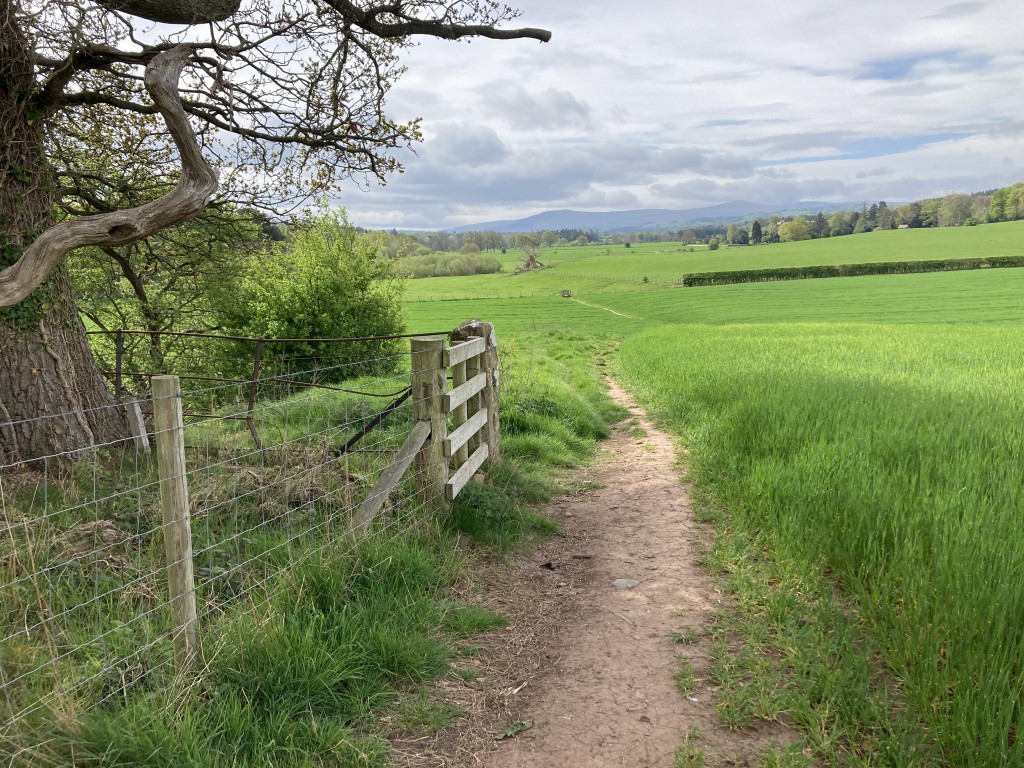
First sight of the Lake District walking through the fields (heading south)
By this point the mood is a very good one, and I'm enjoying the day - stopping off briefly to impress some elderly chaps with my plans to walk to Keswick (to be clear they asked where I was walking to - I was not trying to show off!).
Not too far after Lime House School, Rose Castle comes into view on the right hand side. And as we have a bit of time I Google it, and it is a castle that has hosted kings over the years, including a visit from Edwards I in 1300 - and it formed part of the defensive line to help defend against raiding Scots.
These days if you are after a fancy place to have a wedding it could be yours for a mere £10,000 (and to be fair it probably is a wonderful place for a wedding).
But after here, whilst the countryside is not in any way bad, it transitions into fairly standard countryside - and is more forgettable that everything else we have seen today - with the peak of the trip so far come either side of Lime House School.
Once past Sebergham the path starts to bend to the west - and before long we start to get better views of the hills that lie beyond Caldbeck.
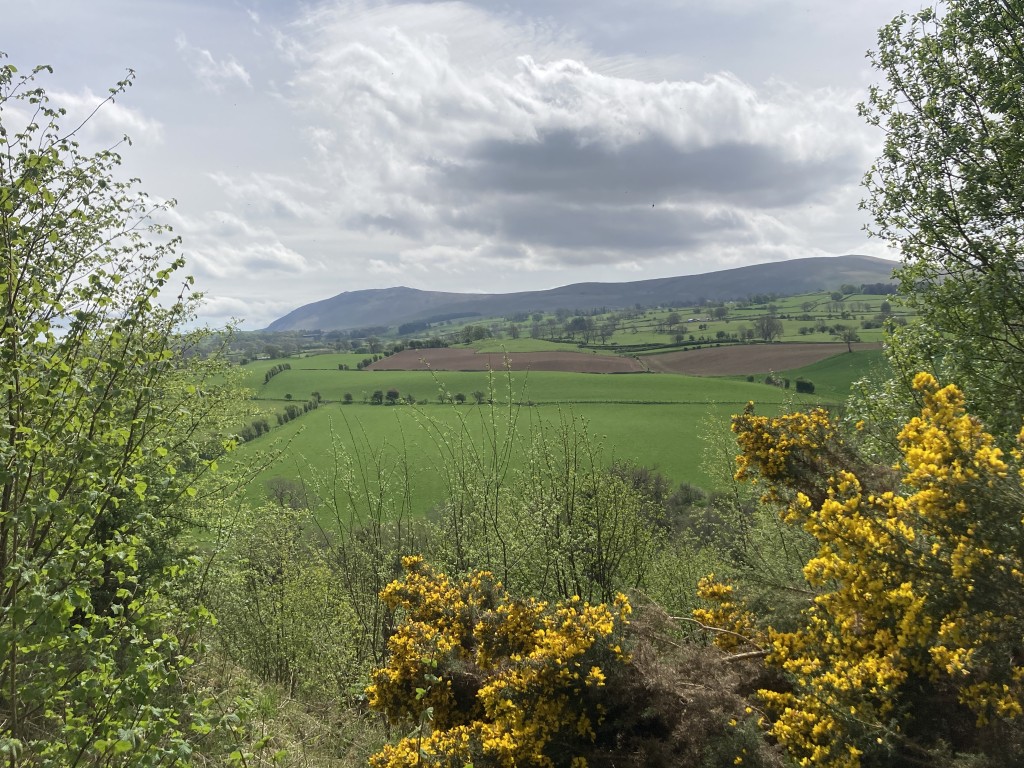
A look across prior to reaching Caldbeck
These views appear via small gaps in the trees though - and we only get brief tastes of what lies ahead before arriving at Caldbeck.
Caldbeck itself is a pretty village and if you are looking to break this walk into two, this is really the main option for accommodation - with nothing else really being an option from here on until you reach Keswick.
There is also a bus service (the 553) that serves the village, but whilst there are a few buses in the morning - there is only one bus after lunchtime, and that is 6:44pm bus to Carlisle. It would however, be fairly easy to walk from here back to Carlisle, and then from here to Keswick on consecutive days.
But having navigated through Caldback, the path starts to climb up gradually - but the peak in the distance is the route that the path will be taking over the hills, climbing to the peak of High Pike along the way.
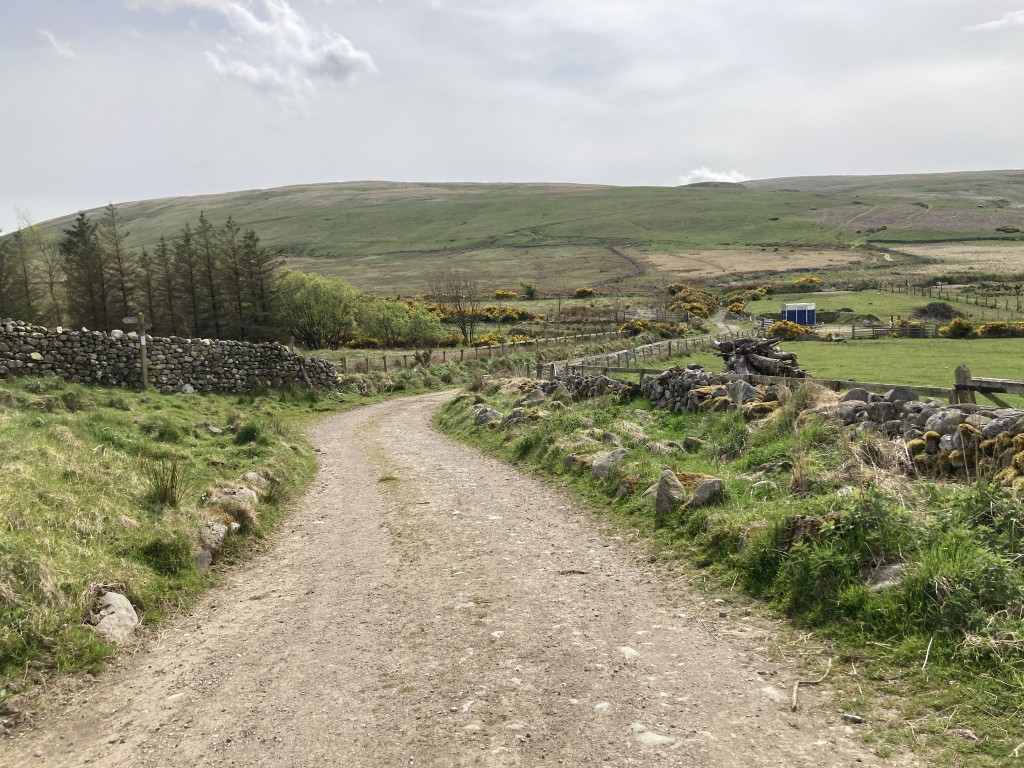
A rather nice view ahead
At Nether Row we pass the last house on the way up, and then its not long before the path takes more of a steeper gradient - and here we just need to set a fairly gentle pace, and settle in for the long-haul - because it will be a little while before the climb stops at the top.
High Pike is a fell not a mountain, but at 658 meters above sea level it is pretty tall - particularly if your starting point is somewhere as low as Carlisle.
Mountains are generally over 600 meters, and with Carlisle only being about 30 meters above sea level, it does feel like for the purpose of this walk it could be considered a small mountain? But it's not, so at this point we haven't just climbed a mountain - sorry.
But as we do reach the top, what we find are some very lovely views out over the surrounding area - and across the peaks beyond.
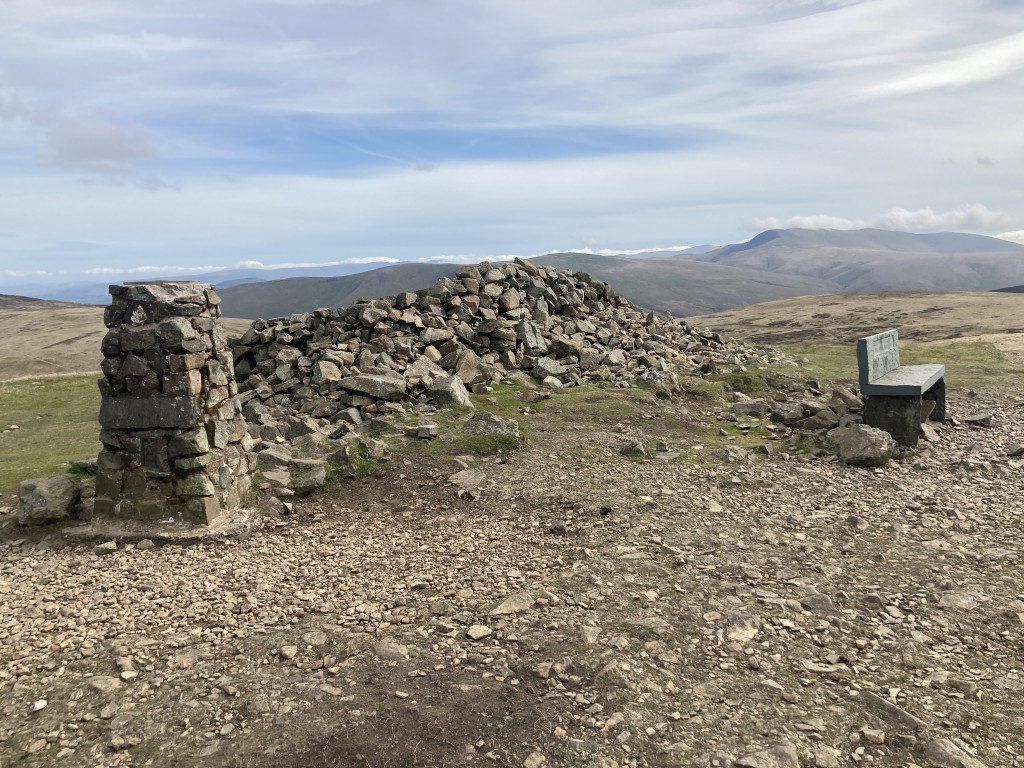
Looking out to the peaks from the top
This is a very different landscape - and now we are in the rugged, and fairly gnarly Cumbrian Mountains - and this is a very quiet stretch, without many car parks or easy access point.
And between here and Keswick there really isn't all that much other than hills, streams - and plenty of marshy spots to bury your feet in.
But whilst initially the path is heading directly south on a fairly flat level, at Grainsgill Beck it is time to change direction and start heading downhill into the valley below.
The descent itself is a bit of a scramble, as there are rocks to go around - and even with it having been very dry, there is plenty of water around to swallow your feet in.
But as we start to make our way to the base of the hill, we start to get better views into the valley - and also start to see more sights of the old mines that used to operate here.
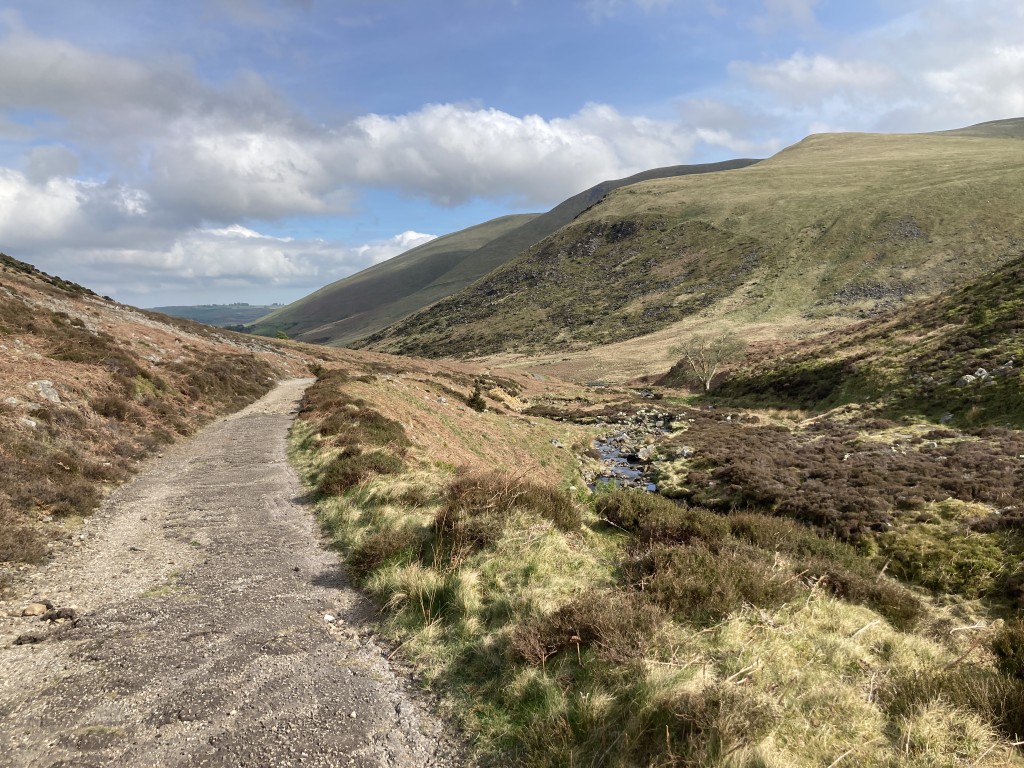
Having dropped down into the valley
The mining works here are part of Carrock Mine - which was mining wolfram, which is an ore used to make tungsten (which is a particularly dense and strong metal, with a very high melting point - which makes it useful for electric filaments and munitions).
These mines have been long disbanded, and there are only small hints of their former presence. However, it definitely must have been one of the prettiest mining spots when in operation - and here I perhaps could be persuaded to become a miner.
But after a slightly slow descent, we are now on a very flat and easily walkable path - and this path turns right, and starts to head along the base of the valley towards Keswick.
This part of the walk is a delight, and although I have tried to limit the photos to the particular highlights (as I could have photoed every step along this stretch of path), there is almost no point along the route that hasn't got an amazing view.
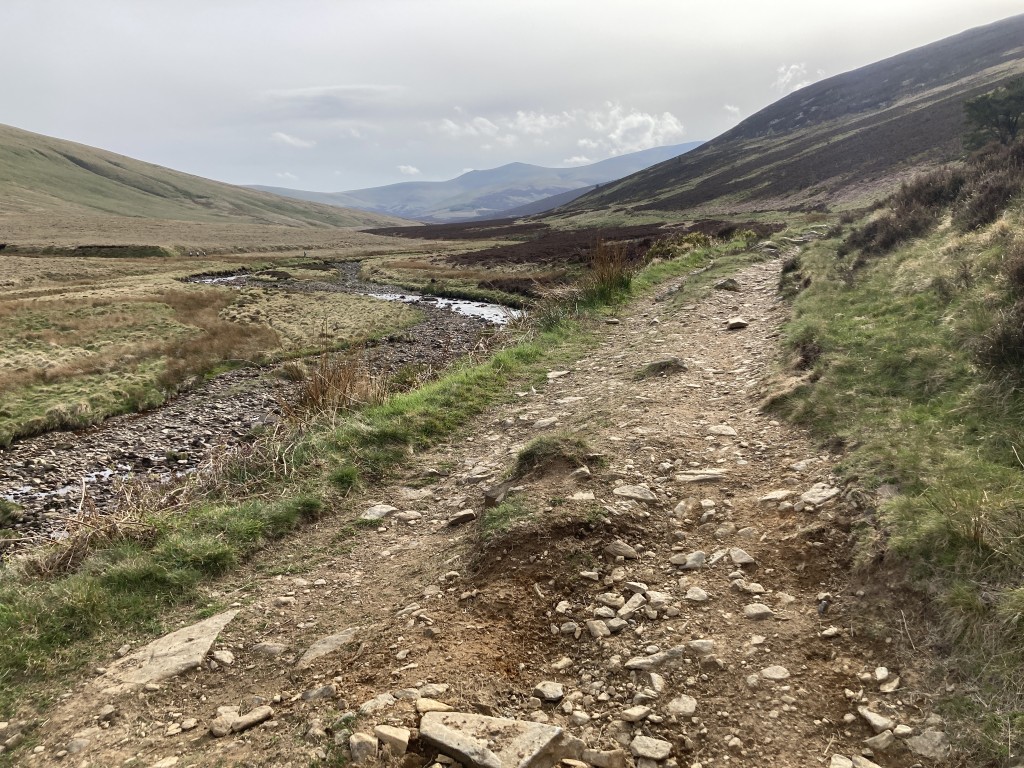
Walking along the valley towards Keswick
After heading past Great Calva, the path rises up slightly and heads up to Skiddaw House - which is a very remote hostel based in this valley - and according to its information, the highest hostel in Britain.
This accommodation is best suited to those content to have no phone signal, but it does at least have lights, heating and hot water (before I put too many people off). And the views certainty aren't too bad.
But here our path turns to the left - and after following up with a right turn, Lonscale Fell lies up ahead.
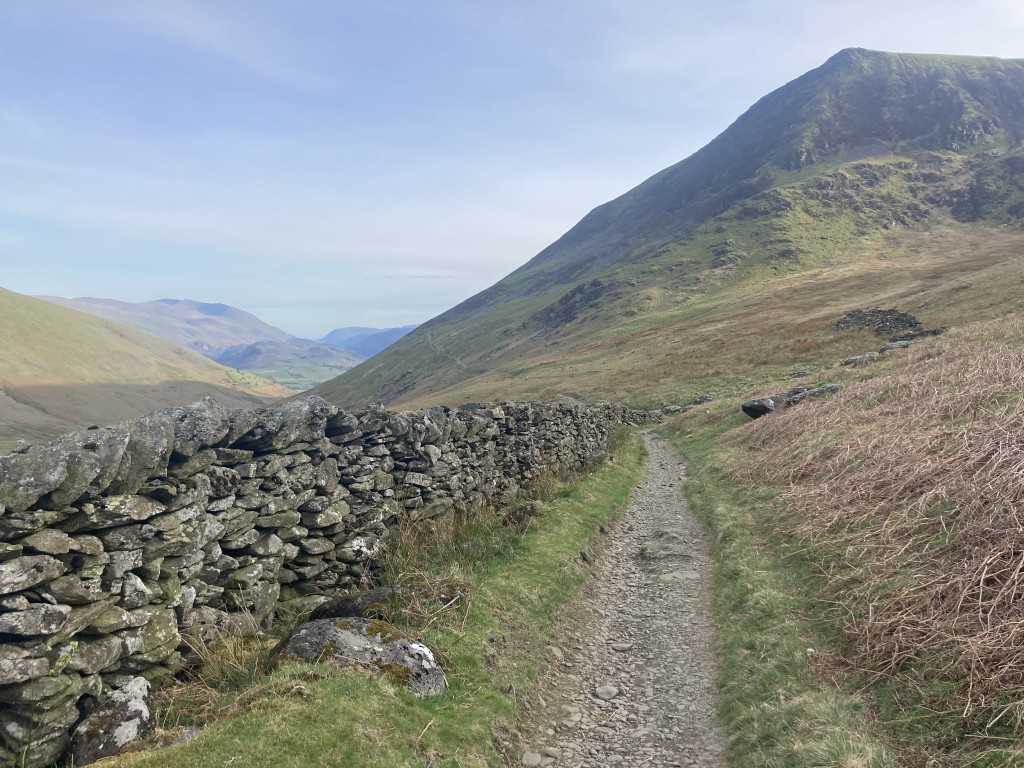
Lonscale Fell up ahead
I'm not a huge fan of the paths that run along the edge of a steep drop (I'm afraid of drops, not heights) - but the path can be seen in the picture above cutting up onto the ridge, and then it hugs the very edge of the ridge (which is bad news).
Doing the same route again, I would at this point take the next left on the path - and follow the lower route on the other side of Glenderaterra Beck. And this would have allowed me to walk with a slightly lower heart rate.
But as it is we head up on this path, which at this point is little more than a goat track hugging the very edge of the ridge (with quite a hefty drop out to the side).
These paths are perhaps not as dangerous as they might seem - and the sheep are quite content to jump off the side of this ridge, and land (presumably) on their feet below - but there are a few narrow stretches that I don't particularly enjoy walking.
But after some very careful walking (to avoid a nasty fall to my early and untimely death - without being too dramatic about it), the path bends round to head west - ahead of a dip down to Keswick. And this stretch a path offers up incredible views in the direction of Keswick.
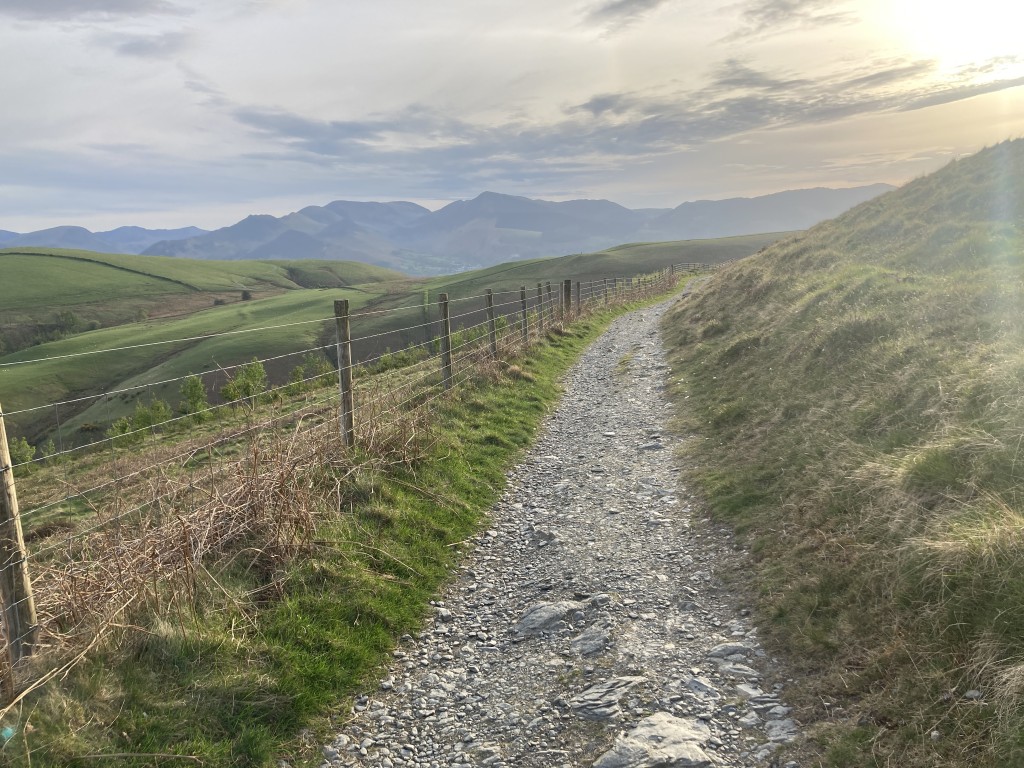
The view having rounded the corner (and finally had some fencing put in to keep me safe)
By this point the sun can be seen to be getting a little lower in the sky - but it had been a big climb up to High Pike, so I'd been taking it gently to keep my tired legs happy - and with Keswick coming up ahead you can fairly easily judge your pace to match the progress of the day.
But in the final light of the day, it is time to begin that final descent into Keswick.
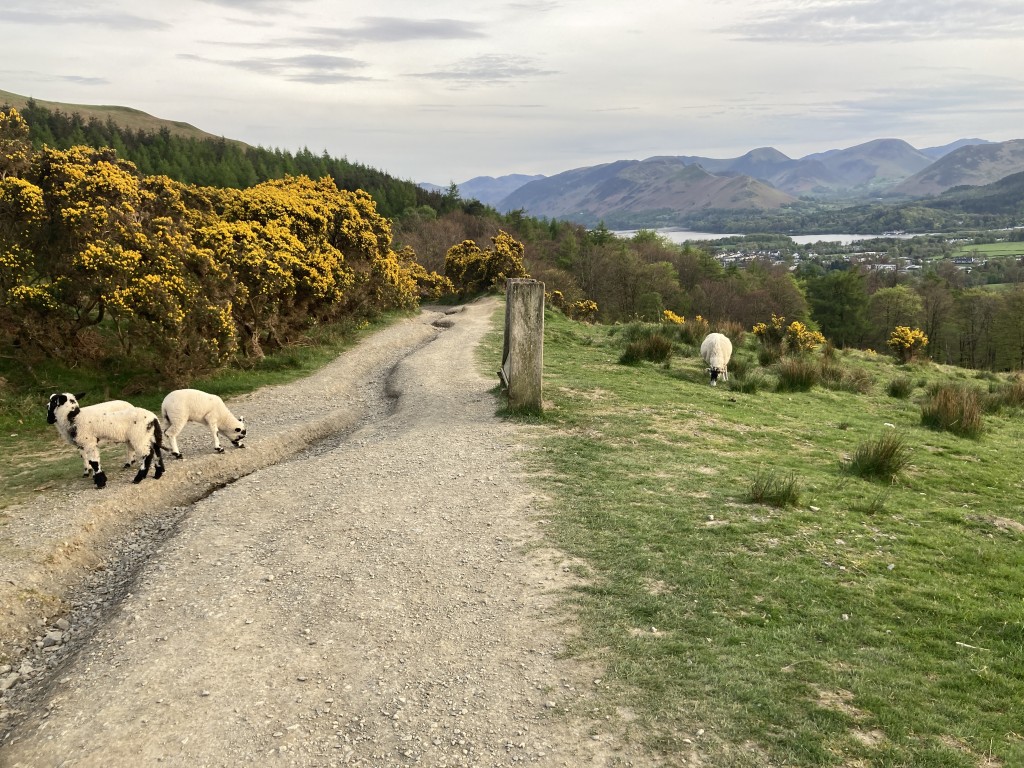
The final stretch heading into Keswick
Having reached Keswick I'm very ready for bed - and head straight to the hotel, but we will have a bit of a potter about tomorrow, before we head home.
Total Distance: 29.5 miles
Total Ascent: 3,760 feet
Enjoyment Rating: ⭐⭐⭐⭐⭐ / 5
Pottering about Keswick on the following day
Normally I split these routes into separate days for each walk, but one of the plans around this trip was to have the opportunity to follow up the previous day with a more lazy explore around Keswick (with no onward walking) - and so today we head out again for a bit of wander (after some breakfast of course).
With this in mind, we do actually continue on along the Cumbria Way - but we are going to divert off wherever takes our fancy - and so we go for a bit of an explore up the first part of the climb up to Cat Bells - and from here we get a nice view out over the lake.
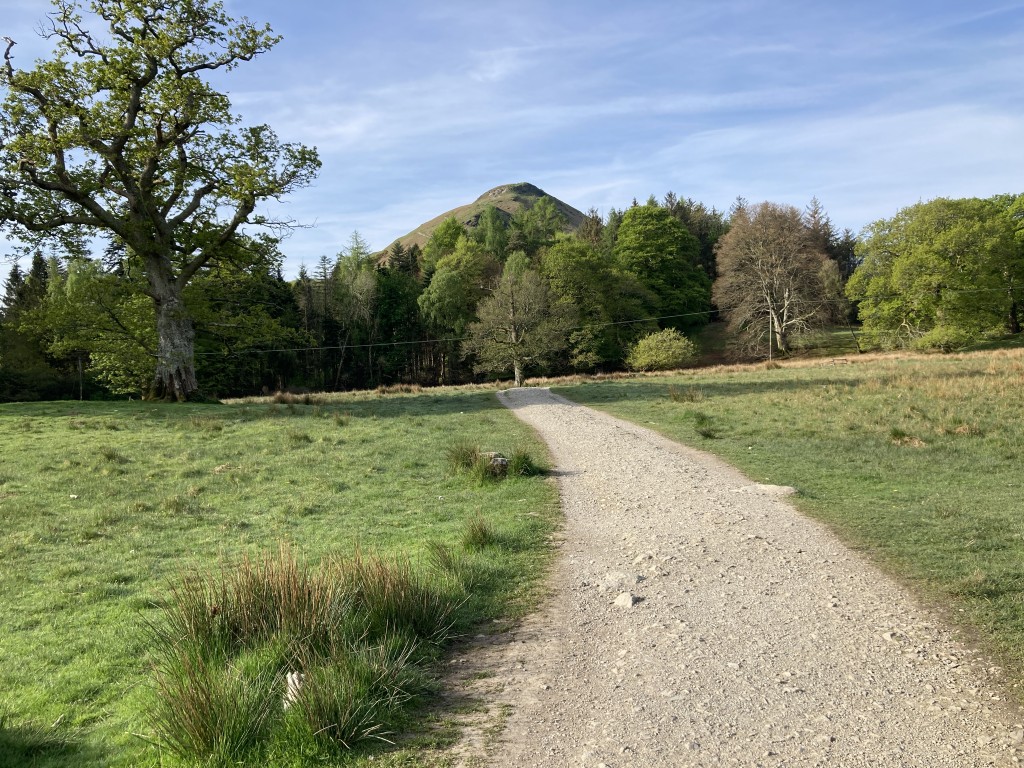
On the way to the turn off for Cat Bells
Going up the hill felt a bit heavy going after the previous day - but fortunately two older ladies were kind enough to have a good old natter about how remarkably slow I was: "You have to remember that not everyone is as fit as us", which did a lot to help me not feel too conscious of my struggles.
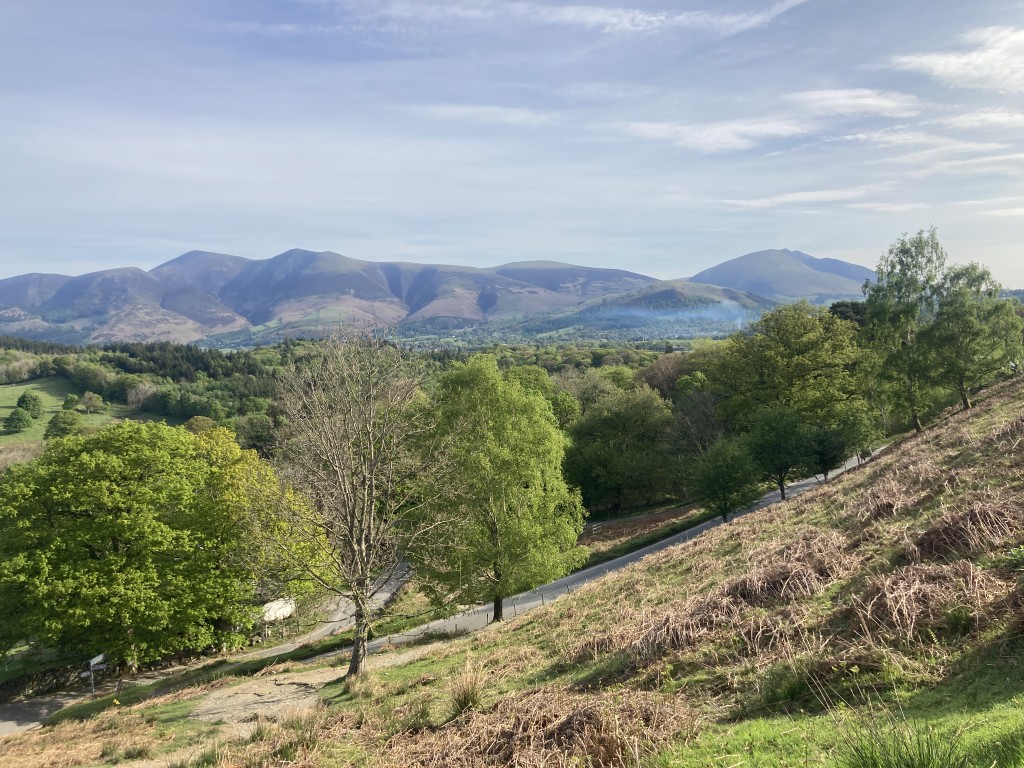
The view after the first section of the climb
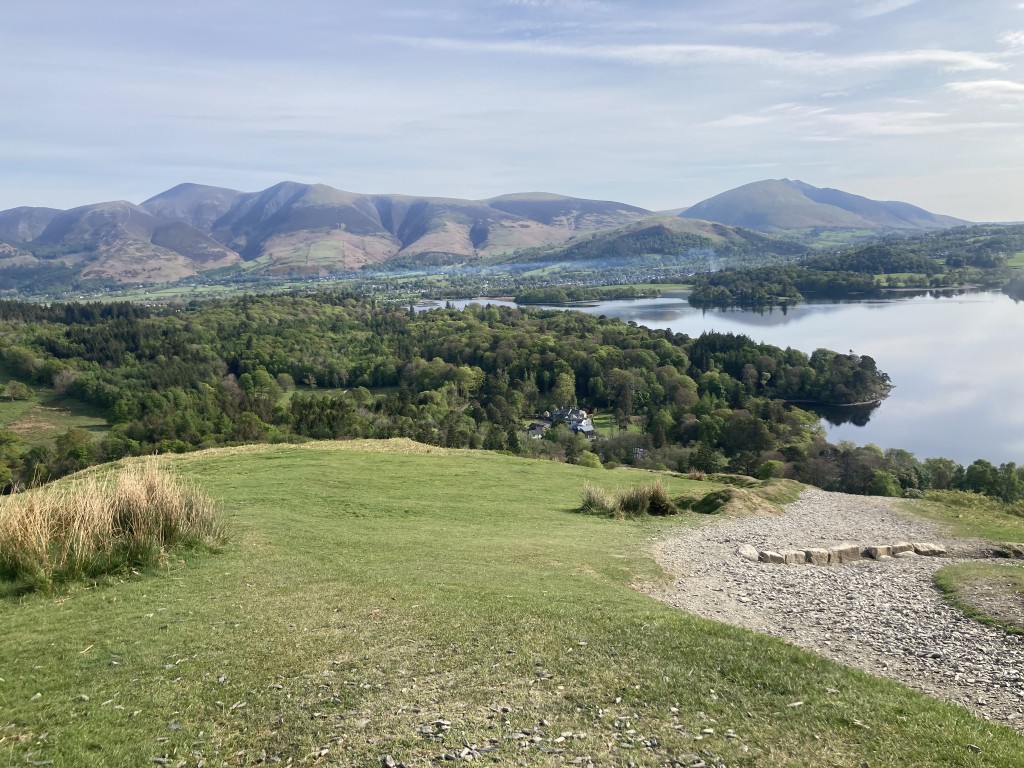
And looking round towards the lake from slightly higher up
After I had finished having a good cry about those remarks, we turn and head back down the hill - and return once again to following the route of the Cumbria Way along the edge of Derwent Water - where I could be safely away from abusive grannies.
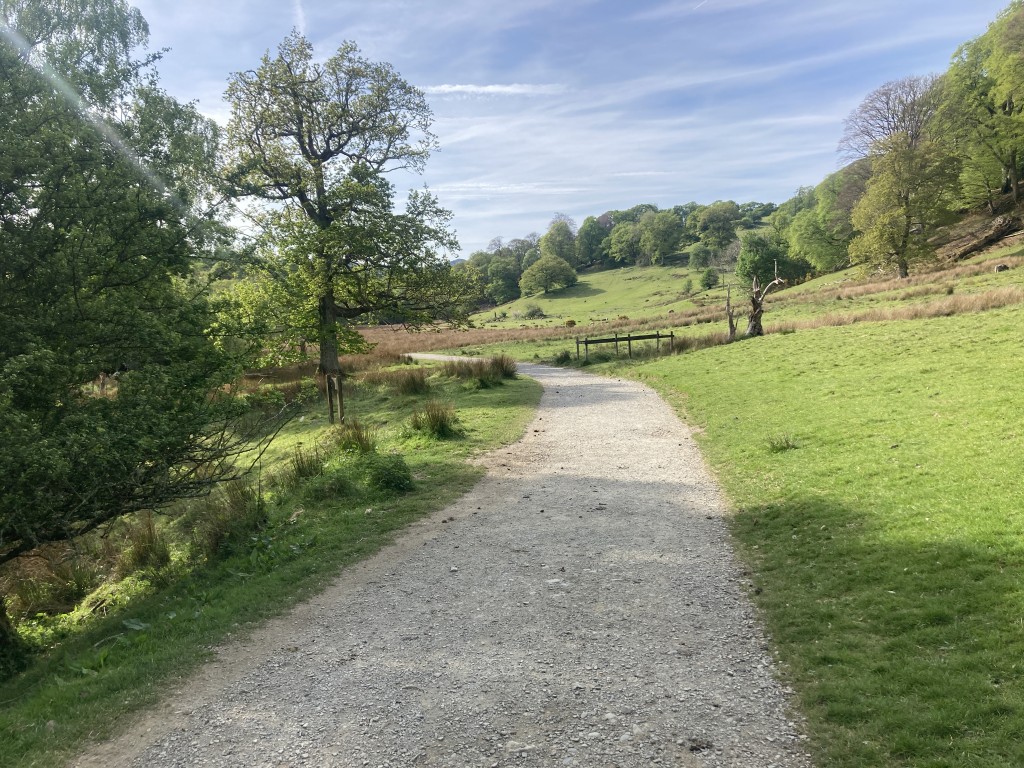
On our way round to meet up with the lake
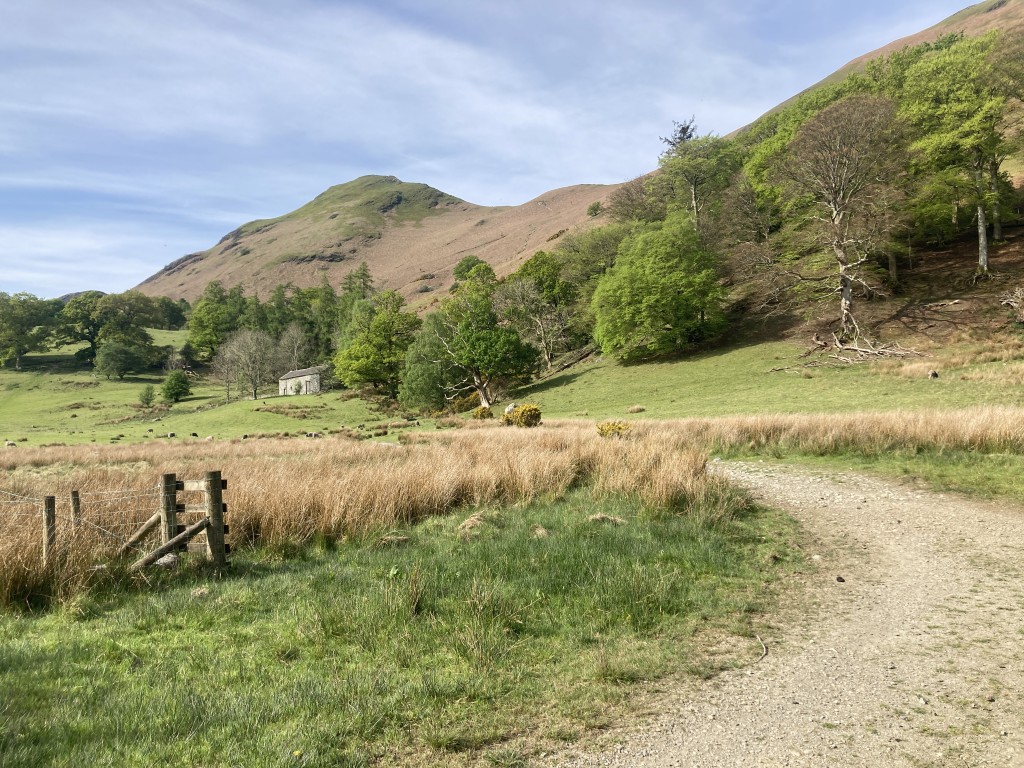
With Cat Bells above us to our right
Sticking with the Cumbria Way proves to be the perfect stretch of path for a lazy amble - and this is a great stretch to walk along, following the edge of the lake round it it's furthest end.
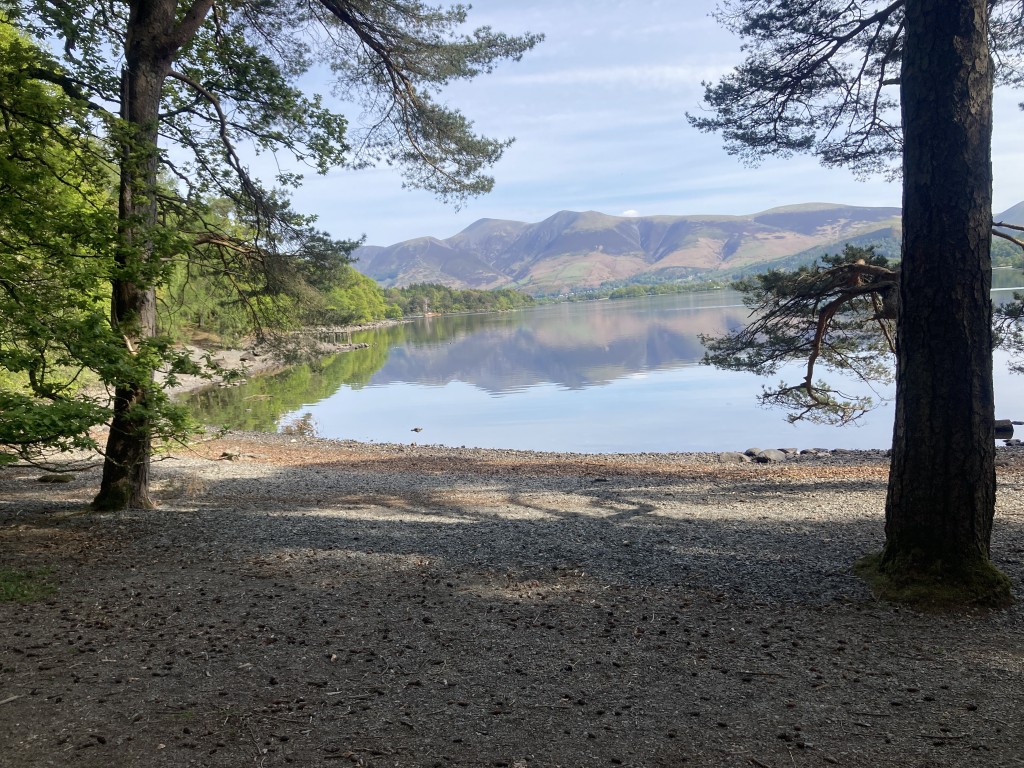
Beside Lake Derwent
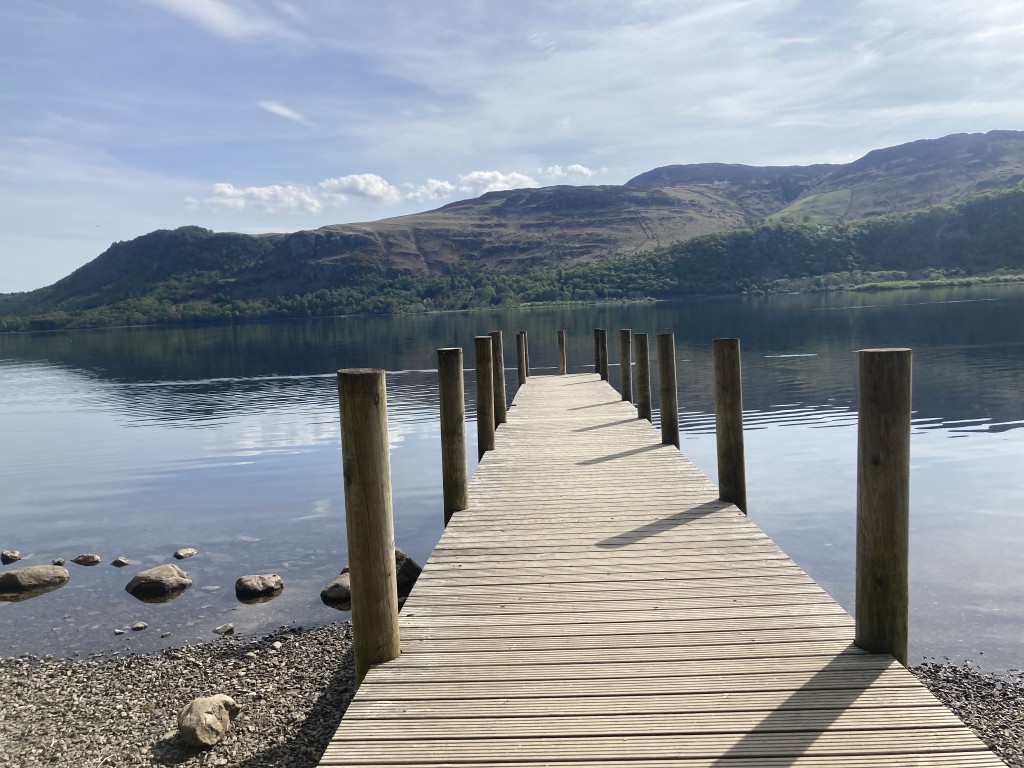
The traditional shot from the pier
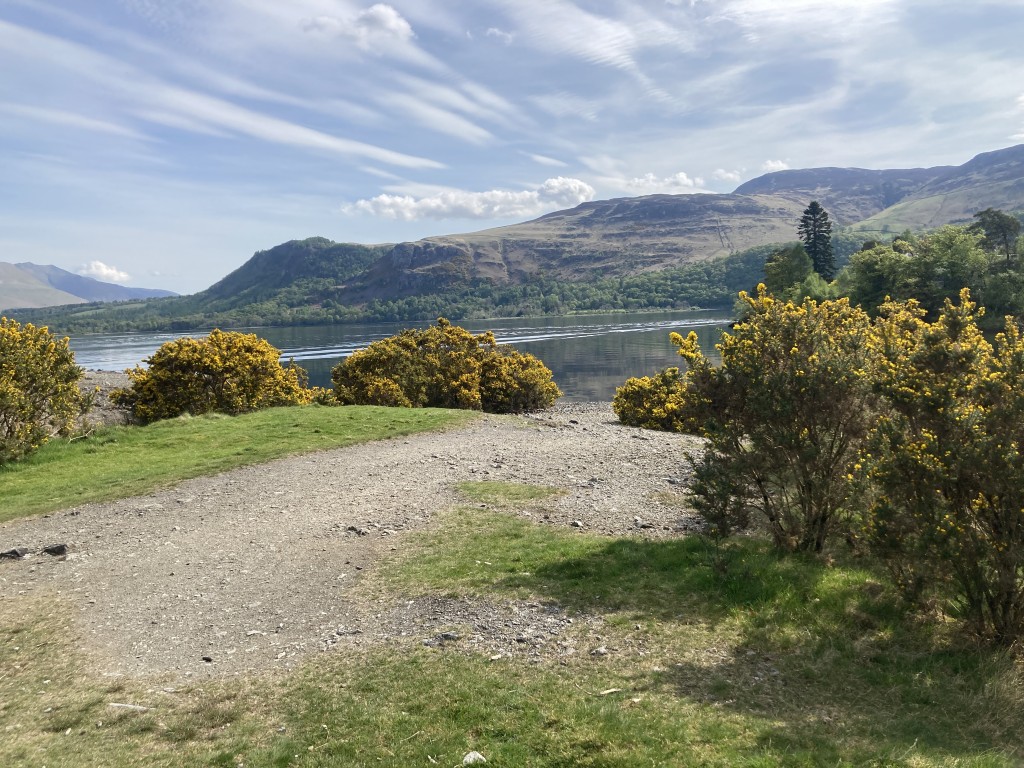
Now at the far end
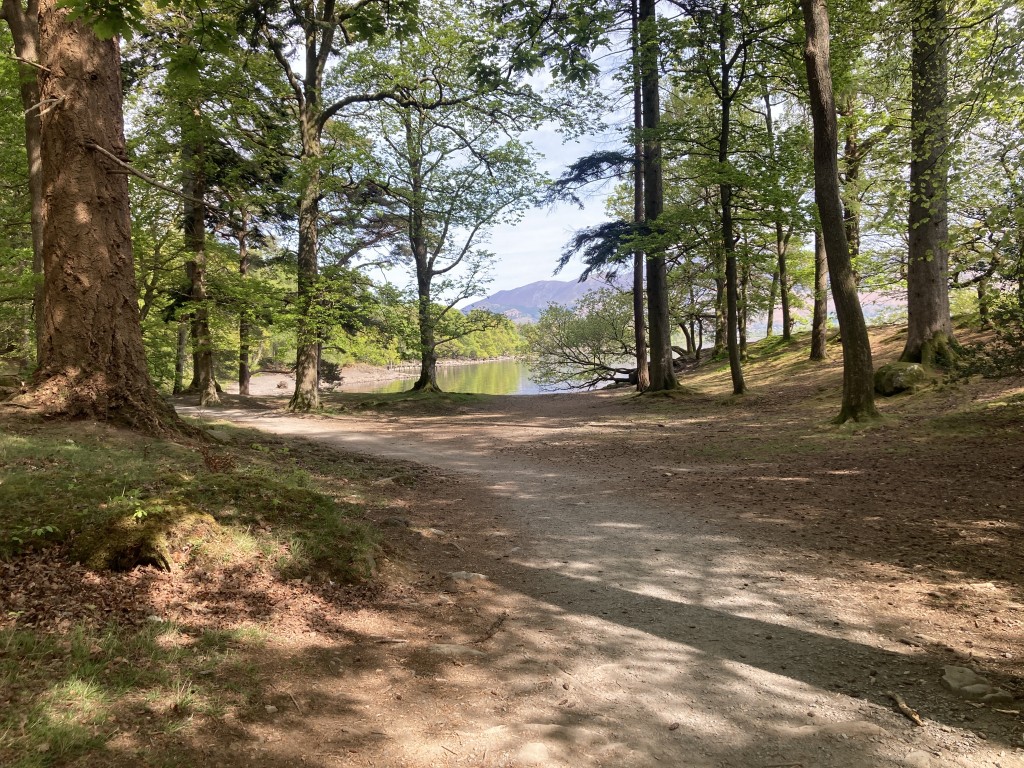
And in the trees
After reaching the end of the lakeside section of the path, we turn make (with not intention of this being a particularly long walk), and return to the centre of Keswick - where we can catch one of the quick and regular buses between the two and Penrith.
This bus service probably offers the easiest route into the Lake District - and from Pentrith, we can simply swap onto a train - and head home.
Click for connecting walks along Hadrians' Wall Path from Bowness-on-Solway to Carlisle and from Carlisle to Haltwhistle.
Disclaimer: This writeup provides a narrative of what to expect rather than a route guide to follow. The route is covered by the 85 and 90 OS Landranger maps - while there is a Cumbria Way guidebook which includes OS mapping (links redirect to Amazon). The route is in general well way-marked